

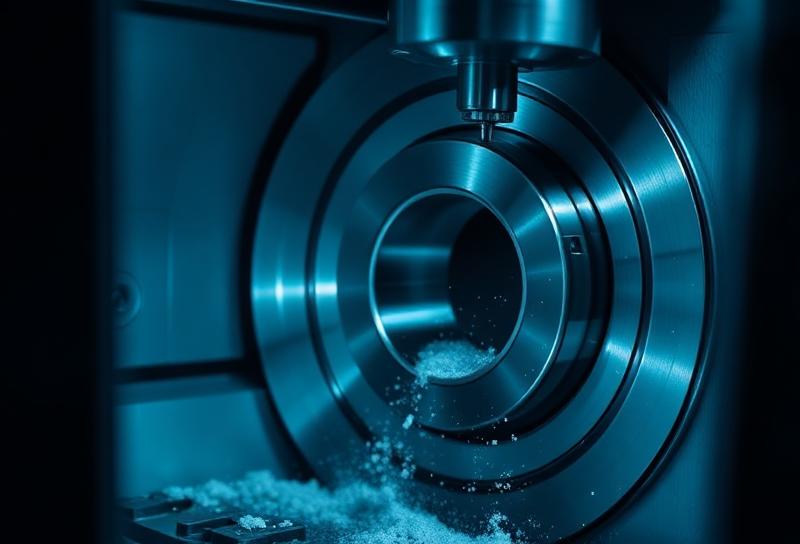
Chatter is the #1 productivity killer in thin-wall bearing ring machining. It ruins surface finish, chips tools, creates dimensional instability, and destroys confidence in your setup. But chatter is not random — it's a stability problem that bearing race manufacturers can solve systematically.
This guide covers the real-world causes and proven solutions used by leading bearing ring manufacturers to eliminate chatter.
The Real Causes of Chatter in Bearing Rings
Understanding the physics behind chatter is essential for bearing race manufacturers:
1. Tool Overhang: Longer boring bars deflect more, and vibration amplifies. This is the most common cause of chatter in bearing ring ID machining.
2. Thin-Walled Structure: Bearing rings behave like tuning forks — they're inherently resonant. Thin walls have lower stiffness and are more prone to vibration.
3. Incorrect RPM Hitting Natural Frequency: Most bearing race machining shops unknowingly cut at exactly the system's resonant frequency, amplifying vibration.
4. Poor Workholding: Standard 3-jaw chucks deform bearing rings during clamping, creating instability and vibration during cutting.
Proven Fixes for Bearing Ring Chatter
Top bearing race manufacturers use these systematic solutions:
1. Minimize Tool Overhang (Golden Rule: 3xD Max)
For bearing ring machining, shorter bars mean higher rigidity:
2. Switch to Hydraulic or Heat-Shrink Tool Holders
Premium toolholding is essential for bearing race machining:
Benefits for Bearing Ring Production:
Leading bearing manufacturers like NSK promote hydraulic tooling for bearing race production.
3. Use Anti-Vibration Boring Bars
For unavoidable long overhangs in large bearing ring ID machining:
How They Work:
Anti-vibration bars extend stable bearing ring machining to 10:1 overhang ratios.
4. Move RPM by 5–15%
Small RPM changes produce big chatter reduction in bearing race turning:
This simple adjustment alone can eliminate chatter in many bearing race operations.
5. Use Elastic/Hydraulic Clamping for Bearing Rings
Avoid deformation to avoid chatter — this is fundamental for thin-wall bearing races:
Proper Workholding for Bearing Rings:
Build Your RPM Stability Map
Top bearing race factories map safe zones and danger RPM bands:
1. Tap Testing: Use an instrumented hammer to measure system natural frequencies for your bearing ring tooling setup.
2. Cutting Tests: Systematically vary speed and document surface finish results on bearing race samples.
3. Stability Lobe Calculation: Use machining dynamics software to predict stable zones for bearing ring operations.
4. Operator Training: Train all operators to recognize chatter onset and respond quickly.
This mapping reduces chatter by 60% by ensuring operators stay in stable zones during bearing race production.
Final Takeaway
Chatter disappears when rigidity + correct RPM come together. Thin-wall bearing rings require specialized fixturing — not standard chucks. As a leading bearing race manufacturer in Gujarat, Lokmanya Industries invests in proper tooling, workholding, and process development to deliver chatter-free bearing rings to OEM customers worldwide.