

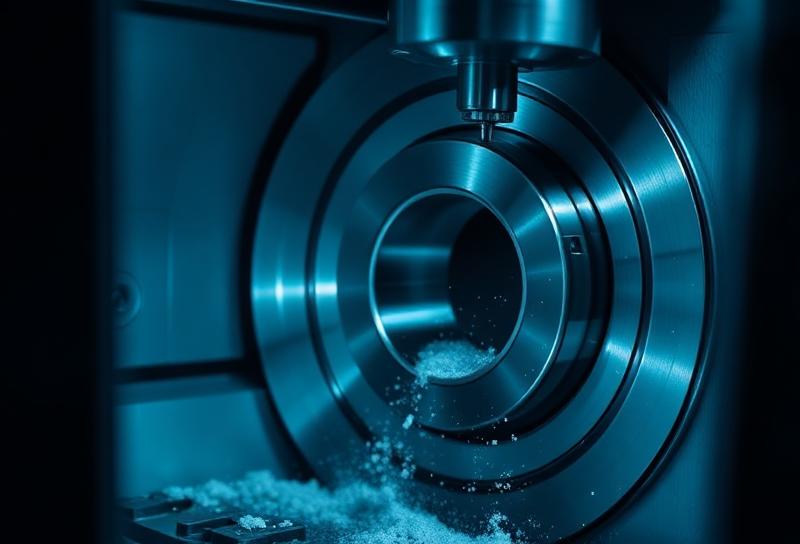
Bearings fail when Ra is too high. The good news? Over 80% of Ra variation in bearing raceway machining comes down to just one factor: Feed rate. This article covers the science and practice of achieving ultra-low surface roughness in bearing race production.
Why Surface Finish Matters in Bearing Races
Surface roughness directly affects bearing performance:
1. Lubricant Film Formation: Smoother bearing raceways allow thinner lubricant films to provide adequate separation, reducing friction.
2. Contact Fatigue: Rough bearing race surfaces create stress concentrations that initiate fatigue cracks.
3. Wear Rate: Asperity contact during running-in removes material from rough bearing ring surfaces.
4. Noise Generation: Bearing raceway surface irregularities create noise as rolling elements pass.
Typical Ra Requirements for Bearing Races:
Why Ra Becomes High During Bearing Raceway Machining
Several factors contribute to poor bearing race surface finish:
1. Excessive Feed Rate: Feeds above 0.08 mm/rev increase tool marks. Feed rate has a squared effect on roughness.
2. Worn Inserts: Dull cutting edges tear and smear bearing steel, leaving poor finish on raceways.
3. Vibration: Even micro-chatter produces waviness on bearing race surfaces.
4. Wrong Insert Geometry: Large nose radius or wrong chip breaker affects bearing raceway surface quality.
Parameters for Ultra-Low Ra in Bearing Races
Leading bearing race manufacturers control these parameters:
1. Feed Rate (Most Important)
Feed rate is the dominant factor in bearing raceway surface finish:
Practical Guidelines for Bearing Races:
Lower feed = better bearing raceway finish.
2. Cutting Speed
Set cutting speed AFTER establishing feed rate for bearing race operations:
3. Insert Selection for Bearing Race Machining
The right insert is critical for low Ra on bearing raceways:
Geometry Features:
Nose Radius for Bearing Races:
4. Coolant Strategy
Proper cooling is essential for bearing race surface quality:
5. Final Skim Pass
The last cut defines bearing raceway quality:
Final Takeaway
Control feed → control Ra in bearing raceway machining. As a precision bearing race manufacturer in Gujarat, Lokmanya Industries applies these parameters systematically to deliver ultra-low Ra bearing races to OEM customers in USA, Europe, and Latin America.