

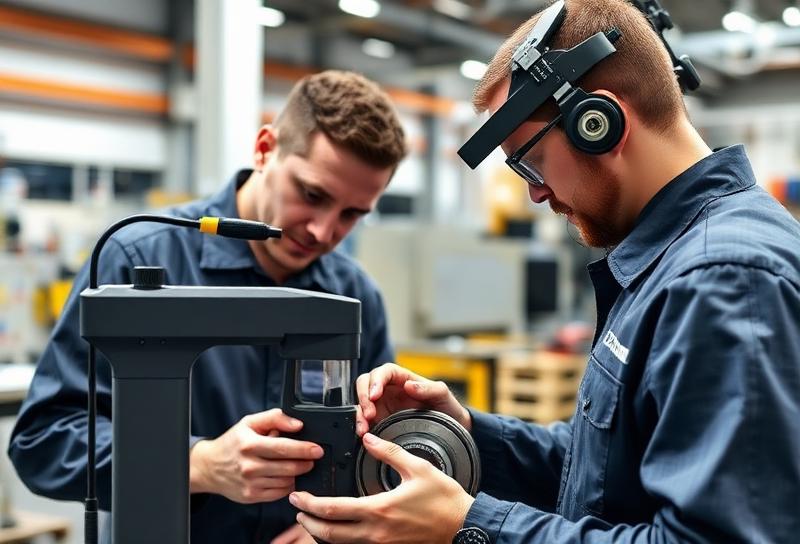
Grinding burns ruin metallurgical properties of bearing races — and result in batch rejection. Most bearing ring manufacturers think the solution is 'use more coolant'. They're wrong. The real solution is matching coolant velocity to wheel speed.
This article explains the physics of grinding burns in bearing rings and provides practical solutions for prevention.
What Are Grinding Burns in Bearing Rings?
Grinding burns are localized areas of metallurgical damage in bearing race surfaces:
1. Rehardening Burns: Localized heating above austenitizing temperature creates brittle, untempered martensite in bearing steel.
2. Tempering Burns: Heating above tempering temperature causes localized softening of bearing races.
3. Surface Oxidation: Severe burns cause visible discoloration on bearing ring surfaces.
Consequences for Bearing Races:
Why Burns Happen: The Air Barrier Problem
Grinding burns occur when coolant doesn't reach the grinding zone on bearing races:
The Physics:
A rotating grinding wheel drags air with it, creating a boundary layer. At typical grinding speeds, this air layer deflects incoming coolant away from the bearing ring grinding zone.
The Critical Factor:
If coolant velocity < wheel velocity → coolant gets deflected → bearing ring burn happens.
The Engineering Formula for Burn-Free Bearing Race Grinding
Match coolant jet velocity to wheel speed:
The Formula:
Vkss ≈ Vc
Where:
Example Calculation:
For a 400mm wheel at 1500 RPM grinding bearing races:
Additional Burn Prevention for Bearing Rings
Beyond coolant velocity, these techniques reduce burn risk in bearing race grinding:
1. Use Softer Wheels: Softer wheels self-dress, maintaining sharp cutting action on bearing steel.
2. Dress Wheels Frequently: Regular dressing prevents glazing that causes rubbing heat on bearing races.
3. High-Pressure Coolant System: 10–20 bar minimum for bearing ring grinding.
4. Tangential Nozzle Alignment: Coolant must strike exactly at the wheel-work interface on bearing races.
Detecting Grinding Burns in Bearing Races
Early detection prevents shipping defective bearing rings:
1. Nital Etch: Standard metallurgical etch reveals burn patterns on bearing race surfaces.
2. Barkhausen Noise: Non-destructive testing detects subsurface stress in bearing rings.
3. Hardness Testing: Softening burns show reduced hardness; rehardening burns show increased brittle hardness.
Final Takeaway
Burns in bearing races disappear when coolant velocity meets wheel velocity. As an ISO-certified bearing race manufacturer in Rajkot, Lokmanya Industries implements these grinding techniques to deliver burn-free bearing rings to OEM customers worldwide.