

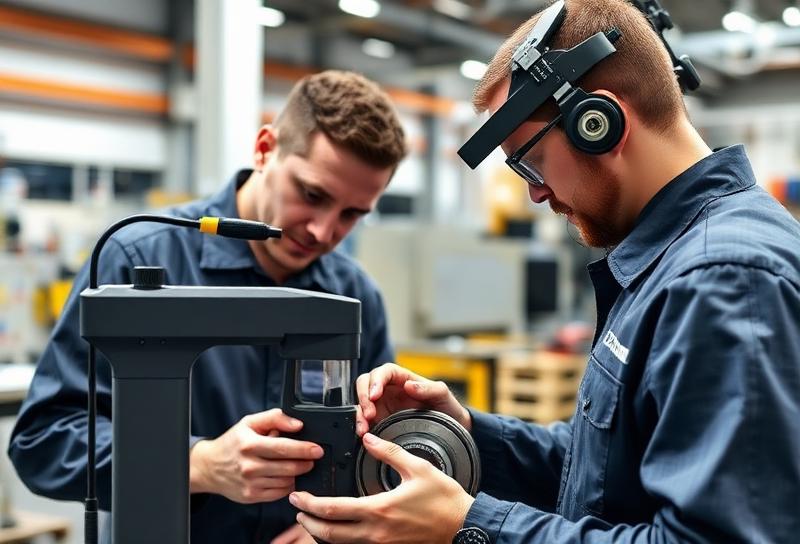
Ovality destroys bearing performance. Achieving <0.005 mm roundness in bearing rings requires not machining skill — but fixturing science. This article covers the systematic approach used by precision bearing race manufacturers to eliminate ovality and achieve world-class roundness.
Why Roundness Matters in Bearing Races
Bearing race roundness directly affects bearing performance:
1. Load Distribution: Out-of-round bearing races create uneven ball/roller contact, concentrating stress and accelerating wear.
2. Noise Generation: Geometric errors in bearing rings cause vibration and noise as rolling elements pass over high spots.
3. Heat Generation: Uneven loading in oval bearing races creates hot spots that degrade lubricant and accelerate failure.
4. Fatigue Life: Stress concentrations from ovality dramatically reduce bearing fatigue life.
Typical Roundness Requirements for Bearing Races:
Why Ovality Happens in Bearing Ring Machining
Bearing race ovality has specific, identifiable causes:
1. Clamping Distortion: This is the most common cause of bearing ring ovality. Too much clamping force causes the ring to collapse into a three-lobed shape. Too little force allows the part to move during cutting.
2. Residual Stress Release: Material stress from forging and heat treatment is released during bearing race machining. As material is removed, the stress balance changes, and the ring distorts.
3. Machine Geometric Errors:
4. Thermal Effects: Heat generated during cutting causes localized expansion. If cutting is not balanced, thermal distortion results in oval bearing races.
Solutions for Bearing Ring Ovality
Precision bearing race manufacturers use these systematic approaches:
1. Elastic/Segmented Clamping Chucks
Specialized chucks distribute clamping pressure uniformly on bearing rings:
Design Features:
Benefits for Bearing Race Production:
2. Hydraulic Low-Force Clamping
For thin-wall bearing rings, hydraulic clamping is essential:
How It Works:
Ideal for:
3. Stress-Relief Before Finish Turning
Release residual stress before final bearing race machining:
1. Rough Machine: Remove most material, releasing the majority of residual stress.
2. Stress Relief: Temper or stabilize the bearing ring to release remaining stress.
3. Semi-Finish: Light cuts establish geometry with minimal stress introduction.
4. Finish Machine: Final cuts with minimal stock removal.
This sequence prevents post-machining distortion in bearing races.
4. Balanced Cutting Strategy
Machine both sides symmetrically to prevent bearing ring distortion:
5. Specialized Metrology Fixtures
Measurement must not introduce error in bearing race inspection:
Schaeffler-Grade Methods:
Top bearing race manufacturers like Schaeffler use fixtures that support rings without deforming them.
Final Takeaway
Ovality is not a machining issue — it is a clamping + stress + measurement issue. As an ISO-certified bearing race manufacturer in Rajkot, Gujarat, Lokmanya Industries invests in proper fixturing and process control to deliver precision bearing rings that meet the most demanding OEM specifications.